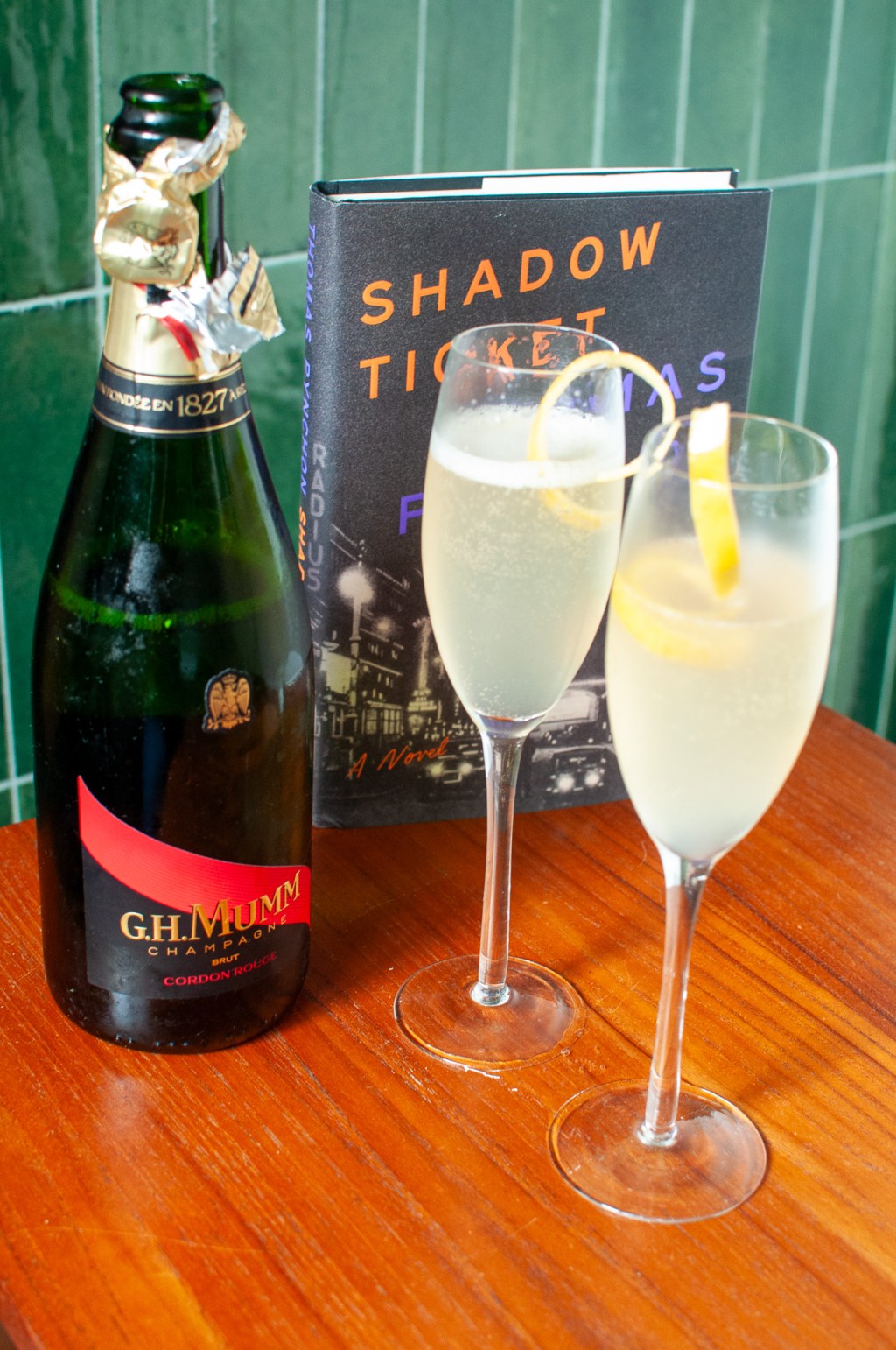
Has there even been a better season to be a Pynhead? (May need to workshop that one a little more sorry…) Paul Thomas Anderson’s One Battle After Another is a Vinelandish cherry on top of the Shadow Ticket sundae. And what a cherry it is! If it weren’t for certain other pressing responsibilities, I might have seen it a dozen times by now. As it is, my one viewing leaves me a rattle of exhilaration still weeks later. Not only is it a hell of a thrilling picture, it’s also redolent of a Pynchonian ethic of preterite resistance and family as bulwark against the totalising forces of capital and power. Man did I love it. Meanwhile, I’ve also started a second reading of Shadow Ticket. I’m taking it slow and soaking up the atmosphere after a giddy racing first read. Prohibition Milwaukee comes across as a relative idyll with the knowledge of Hicks’ ultimate exile into a rapidly darkening Europe. Every chapter is a joy, though a joy that darkens page by page.

We return again today to the junction between Shadow Ticket’s lindy-hopping pineapple-rolling Outfit-run American antics and its umbral back half in the shadowed forests of the continent. As it happens, it’s also a kind of junction between Shadow Ticket and One Battle After Another. The cocktails mixed up aboard the Stupendica, on which Hicks finds himself headed out of an America that might not exist to get back to, include a French 75 (sharing the bar with the Sidecar we got into last time). (We’re talking the same sentence as last time, so I won’t quote again).
As well as a classic cocktail, the French 75 is the name of the left-wing resistance group in One Battle After Another. How the group comes to bear this name is left for us to ponder. This history of the cocktail does give some clues, although that history seems contested. One story goes that English soldiers invented the thing while fighting in France in World War I—and served it in a 75 mm artillery shell (see also: Torpedo Juice). You might also come across the claim that the recipe was French government propaganda, intended to help rally the population around the war effort. What is uncontested is that the drink is named for the French 75 mm canon (or “Canon de 75 modèle 1897“), presumably reflecting the wallop packed by both drink and gun. We can hypothesise that PTA’s radicals hope to pass as cocktail-harmless before revealing they are in fact howitzers ready to bring down the whole show.
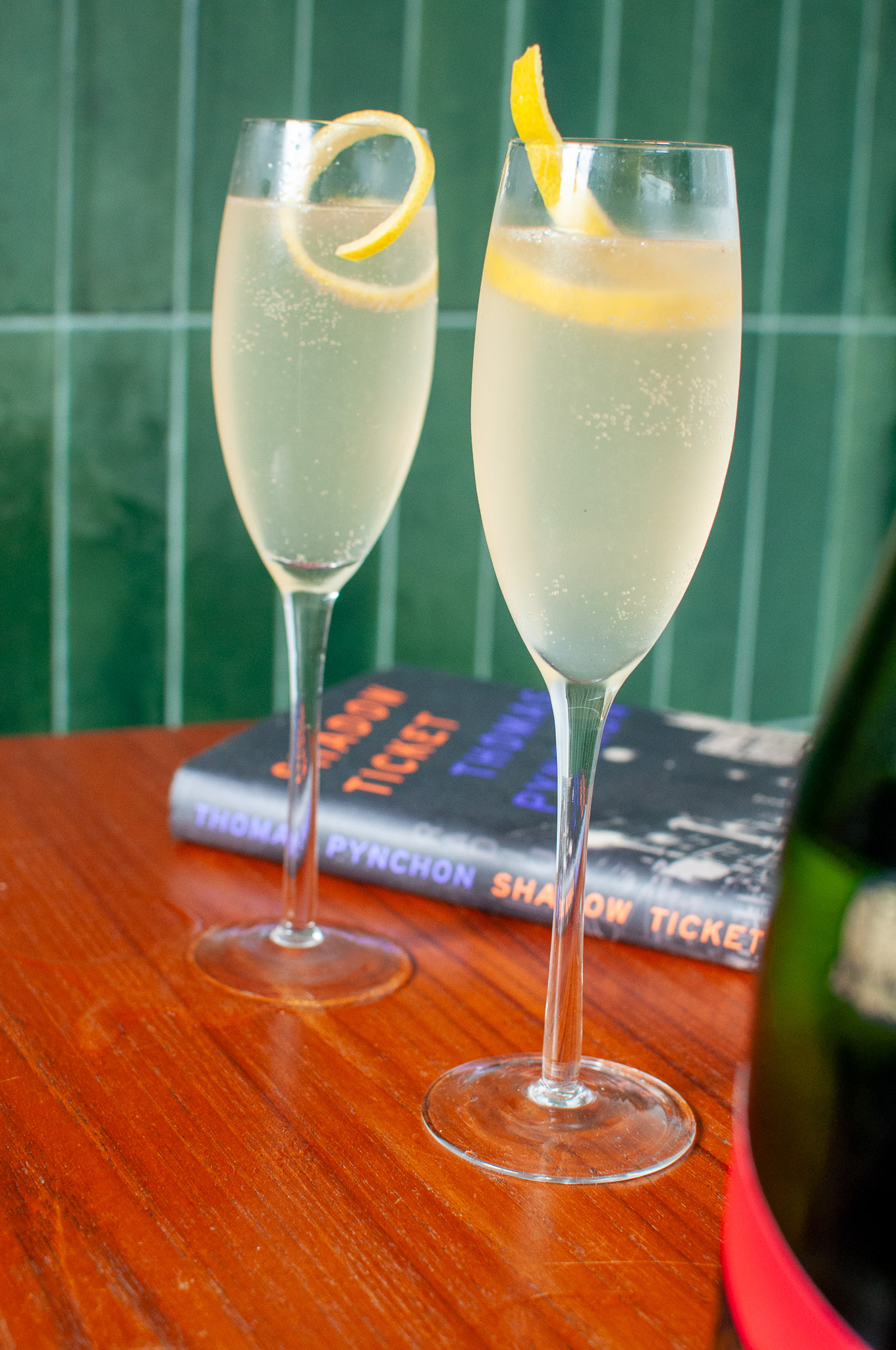
(Ballistics plus mixology — how did Pynchon make it through his first nine books without mentioning a French 75?!)
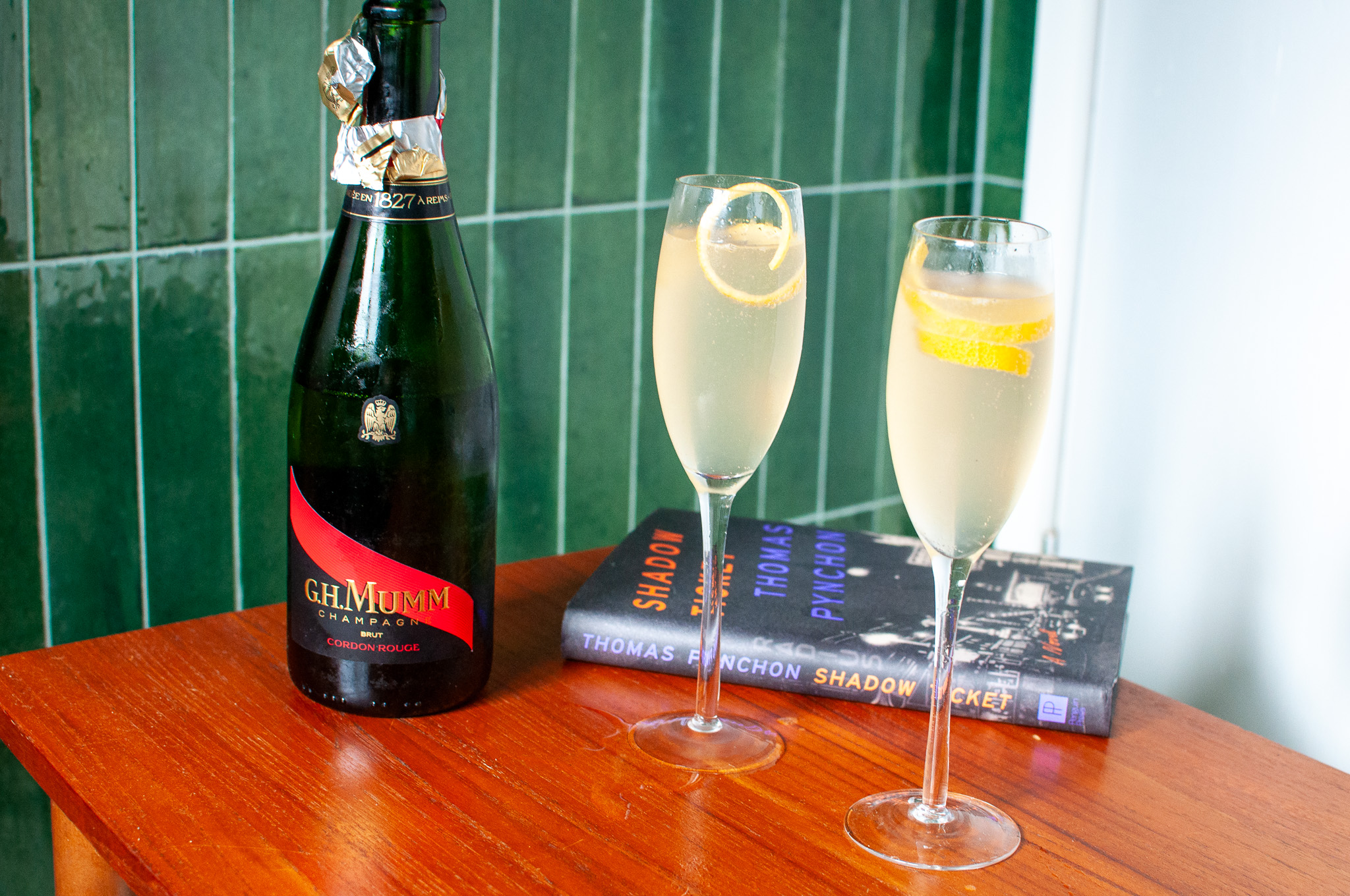
The French 75 recipe is another locus of some dissent. It’s most often made with gin, lemon juice, simple syrup, and Champagne. But the gin sometimes, maybe originally, gets swapped for cognac. I’ve gone with the typical receipt of 2 shots of gin, half a shot lemon juice, a quarter shot simple syrup, shaken over ice then topped up in flutes with maybe three shots worth of Champagne. The result tastes bright, zippy, celebratory. Champagne with the citrus, booze, and sugar boosted a little. It’s extremely easy to drink and does certainly pack a punch.
One Battle After Another is out online now. Get yourself in front of a copy, and keep those 75s charged (in every sense…). Viva la revolución!
 Tom Pynchon's Liquor Cabinet