
Back at the start of 2019, we drank some commercial sake here alongside the beautiful volumes of the Japanese edition of Gravity’s Rainbow, translated by Yoshiaki Koshikawa. I had realised too late that the sake under the Rainbow was actually homemade, and therefore an entirely different beast. We discussed a brief sake appearance in Vineland instead. It has taken me five years to return with a homemade version. I’ve made hectolitres of beer and wine in that time, but sake is a more intimidating beast.

The sake in GR gets made under challenging conditions. Takeshi and Ichizo, the “Komical Kamikazes,” are stationed on a remote island apparently called “Puke-a-hook-a-look-i Island.” Puke-a-hook is apparently too remote for any targets to stray their way, and Takeshi and Ichizo live a pretty idyllic existence together frolicking with the crustaceans. Kenosho the radarman is the one making the sake:
Every morning, and sometimes evening too, the Scatterbrained Suicidekicks mosey down to the palm-thatched radar shack to see if there’s any American targets worth a crash-dive, anywhere inside their flying radius. But it’s the same story every time. Old Kenosho the loony radarman who’s always brewing up a batch of that sake back in the transmitter room, in a still he’s hooked up to a magnetron tube in some fiendish-Nip way that defies Western science, every time the fellas show up this drunken old reprobate starts cackling, “No dying today! No dying today! So solly!”
Gravity’s Rainbow, p. 691.

If Kenosho’s name wasn’t enough of a giveaway that there was some kidding going on, the whole game soon falls apart. More or less by the end of the paragraph, it becomes entirely evident that Takeshi, Ichizo, and Kenosho are less “real people” and more racist tele-hallucinations echoing around Slothrop’s decaying, TV-drenched, inescapably American consciousness. Before the paragraph is out, the reader has been declared the winning “Paranoid of the Day”. And is it too paranoid of me to note that sake is not actually distilled, rendering Kenosho’s magnetron still a bit superfluous?

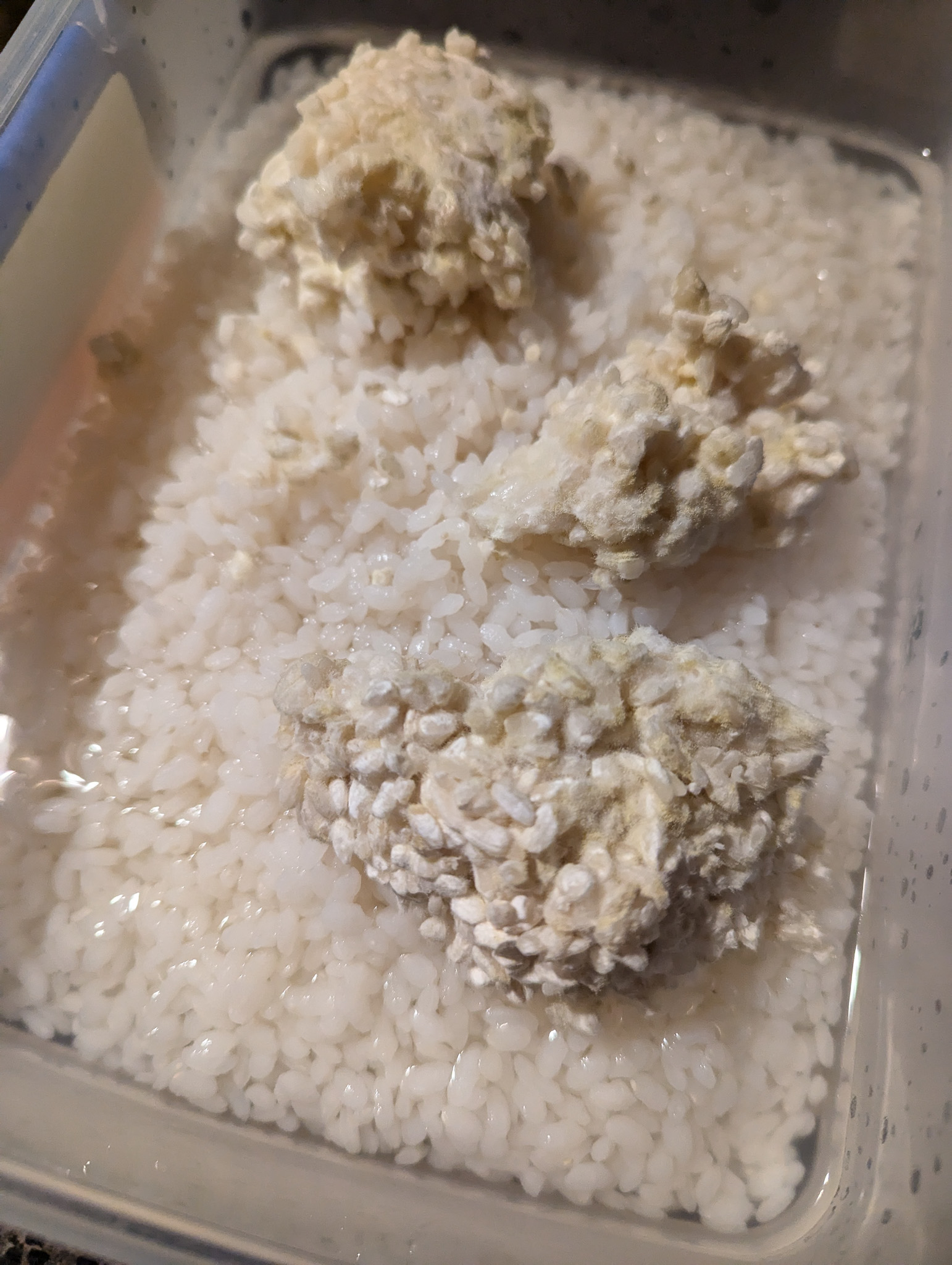
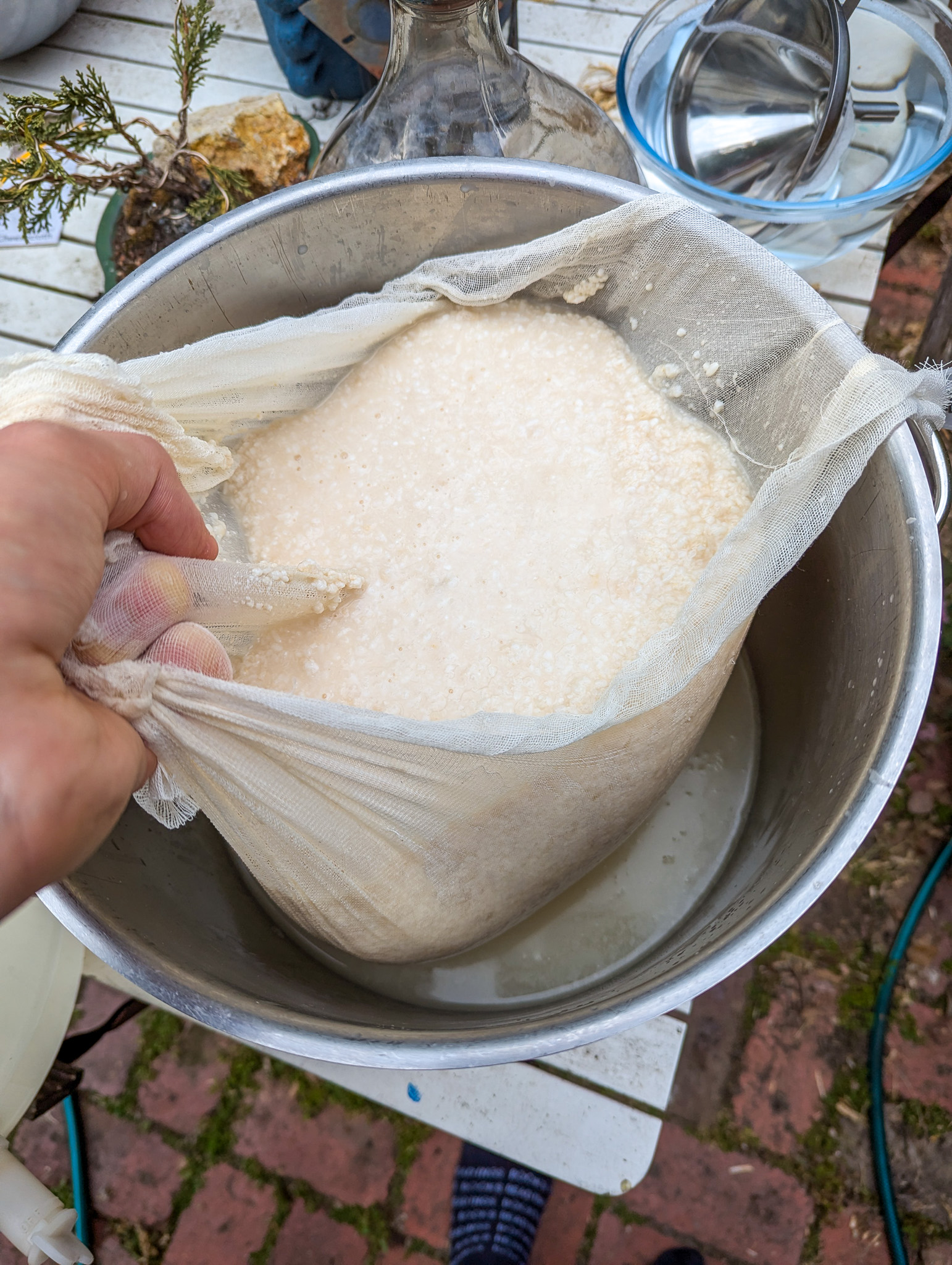
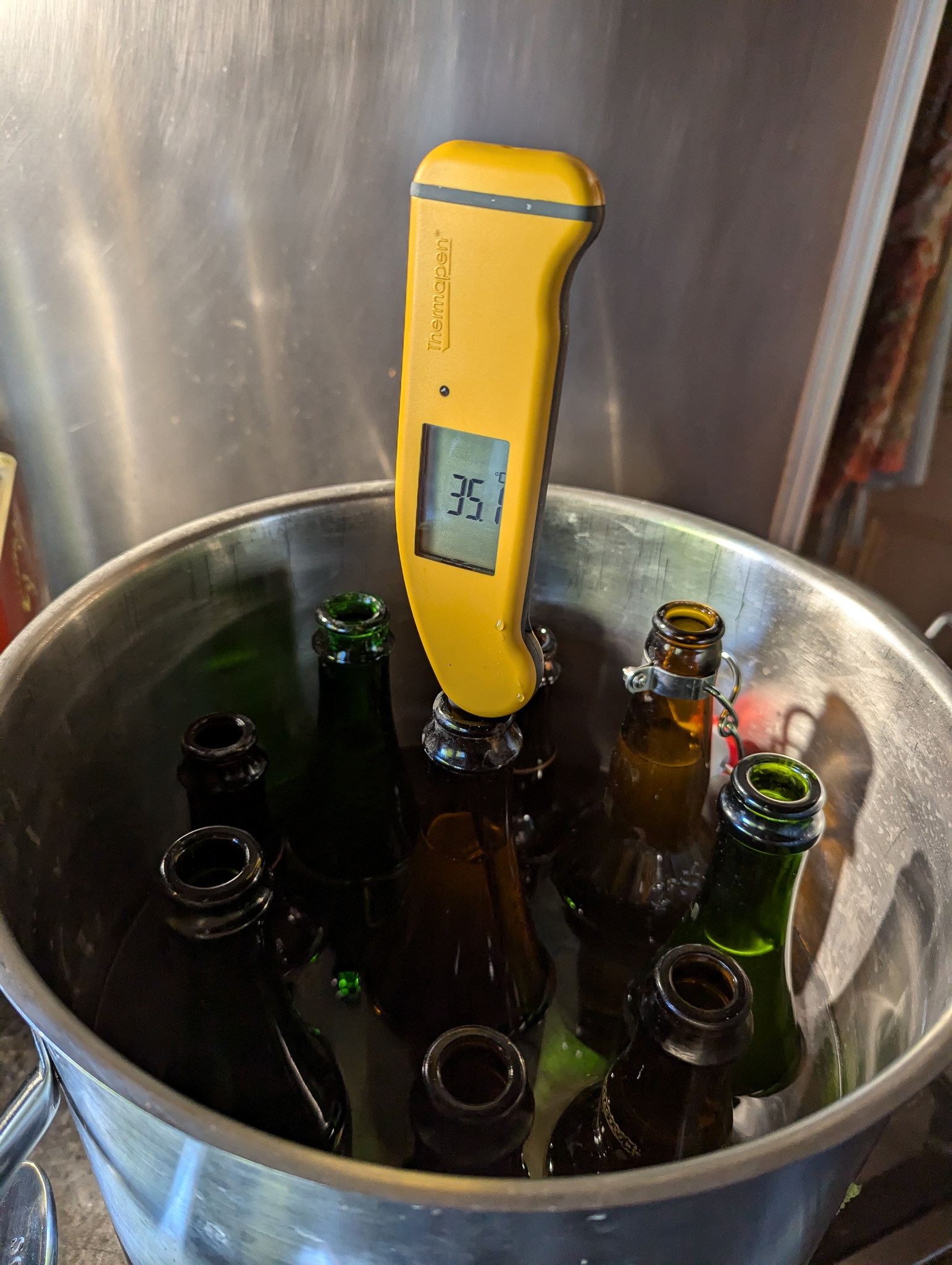
My own sake making process began by inoculating some steamed rice with some koji-kin spores. These came as dried rice grains coated with spores that shook out into an ominous green cloud. I then kept the inoculated rice warm and humid for a couple of days while the koji grew. By the end of the process, a dense white matt of koji mycelium had bound much of the rice together. The koji was ready. Some of this koji rice then joined more freshly steamed rice, wine yeast, and water to form a moto starter culture. This developed in the fridge for a few more days before stepping up with more rice and more koji in the moromi, or main fermentation. In sake making, the enzymes from the koji convert starches in the rice into sugars for the yeast to ferment into alcohol; saccharification and fermentation happen side by side. After a few weeks of fermentation, I ran the sake through some cheesecloth to separate it from the ricey lees known as kasu. I then gave it a few more weeks cold in the fridge before bottling. A couple of bottles went straight in the fridge, and the remainder I pasteurised by heating to 60°C. (If you would like a more detailed description of the sake making process, I highly recommend my two chief sources: Small Batch Booze and the Mad Fermentationist).






The end result was a greater success than I dared hope. It not only looks, smells, and tastes like sake, it actually seems to be quite good! It is reasonably delicate despite its ~16% abv, with notes of pear, citrus, and, uh, steamed rice. (The pictures here show it in a lovely old sake set inherited from my late grandmother—the set quite possibly holding sake for the first time here). The process of making it was one of slow, focused attention—a very different energy to what Old Kenosho is giving off! Slothrop, or what’s left of him, seems to be mixing a bit of Old West moonshiner into his vision of Kenosho. The succinct clarity of the actual finished product is almost the antithesis of the dark spiralling vaudeville derangement of the end of Gravity’s Rainbow. But perhaps I’m underestimating Kenosho. Perhaps that’s the part of the point: amidst chaos, the act of creation can still carve out its own quiet order.

 Tom Pynchon's Liquor Cabinet